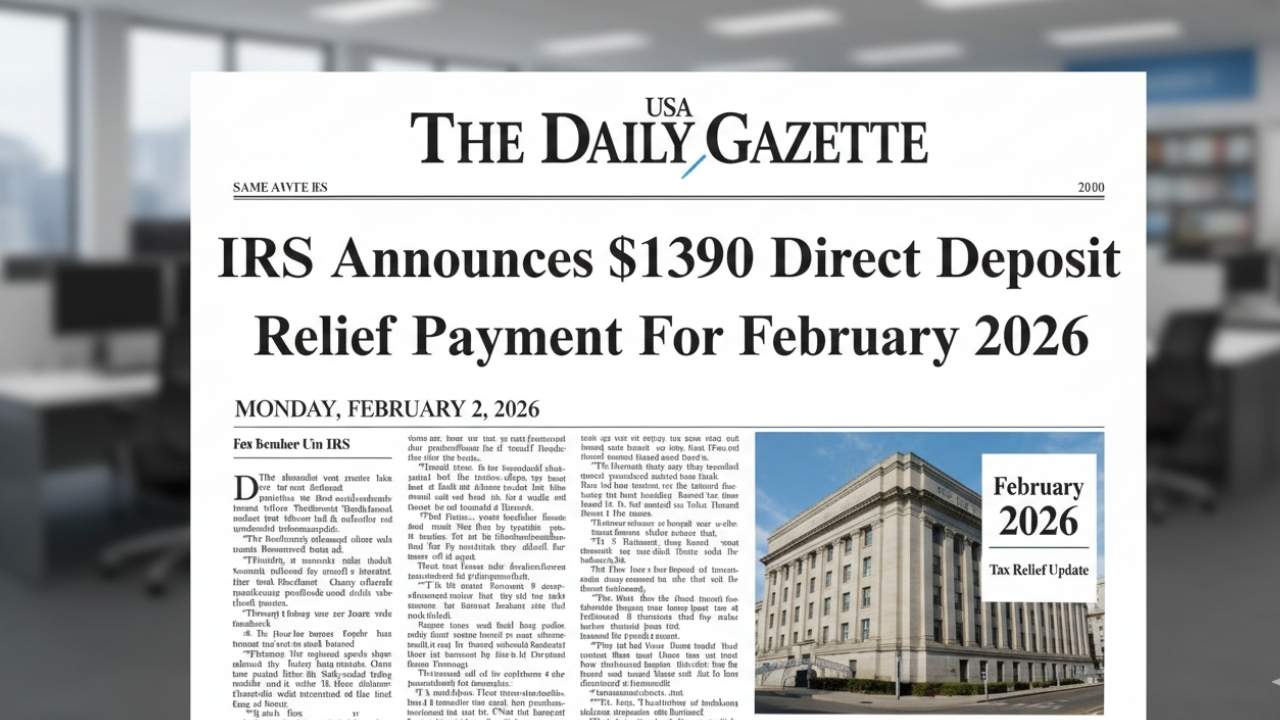
IRS $1390 Direct Deposit Relief Payment As 2026 approaches, discussions in the United States have centered on the proposed $1,390 direct deposit relief payment. Many citizens are hopeful for financial assistance, but it is important to note that the federal government has not officially confirmed the release of this payment. Current information is based largely on speculation and third‑party reports. Taxpayers should rely only on official sources such as the Internal Revenue Service (IRS) for accurate updates.
Quick Reference: Proposed $1,390 Relief Payment
| Feature | Current Status | Notes |
|---|---|---|
| Payment Amount | $1,390 | Proposed, not confirmed |
| Approval | Pending | Requires congressional authorization |
| Distribution Method | Direct deposit | If approved, via IRS systems |
| Eligibility | Citizens and permanent residents | Must file tax returns and hold valid SSNs |
| Timeline | Early 2026 (speculative) | No official date announced |
| Source of Funds | Possible tariff dividends | Not officially confirmed |
| Official Statement | None yet | IRS has not issued confirmation |
This table summarizes the key aspects of the proposed $1,390 relief payment, highlighting its speculative nature and the need for official approval.
Understanding the Proposal
The $1,390 direct deposit payment is currently only a government proposal. It has not yet been approved by Congress. Some reports suggest it may be linked to dividend funds collected from tariffs, which could be distributed to eligible taxpayers. However, without official authorization, the payment cannot be guaranteed. Any claims of immediate release should be treated with caution.
Why the Payment Is Being Discussed
The proposal has gained attention because of its potential to provide economic relief to low‑ and middle‑income families. If approved, the payment could serve as temporary financial assistance. Reports suggest the government intends to deliver funds directly through bank deposits, which is why taxpayers are encouraged to keep banking details and social security information updated.

Eligibility Criteria
To qualify for the proposed $1,390 payment, individuals may need to meet conditions such as:
- Legal citizenship or permanent residency in the United States
- Filing of income tax returns for previous years
- Possession of valid social security numbers for self and dependents
- Income and assets below government thresholds
- Social security beneficiaries may qualify if other conditions are met
How to Prepare for the Payment
Even though the payment is not confirmed, taxpayers can prepare by:
- Updating bank account information for direct deposit
- Filing accurate tax returns for the previous year
- Ensuring all social security numbers are valid
- Keeping financial records organized to avoid delays
Official Communication and Updates
The IRS is the sole authority for issuing federal payments. As of now, no official statement has confirmed the $1,390 payment. Citizens should monitor the IRS website and federal announcements for reliable updates. Depending on unofficial sources may lead to misinformation.
Potential Connection with Tariff Dividends
Some reports suggest the payment could be linked to tariff dividend funds. If approved, these funds might be distributed as relief. However, the government has not confirmed whether tariff collections or other programs will be the source.
Timeline Expectations
Speculation suggests that approval and distribution could occur in early 2026. Eligible individuals may receive direct deposits if authorized. Congressional approval and IRS processing will be required before any funds are released.
What Citizens Should Avoid
Americans should avoid acting on rumors or speculative reports. Sharing personal information on non‑official websites or expecting deposits before authorization could lead to confusion or fraud. Only verified government portals should be used for updates.
Preparing Bank and Tax Information
Potential beneficiaries should ensure bank accounts are ready for direct deposits, with accurate account and routing details. Tax returns must be complete, and social security numbers valid. These steps will help avoid complications if the payment is approved.
Impact on Taxpayers
If authorized, the $1,390 payment could provide meaningful support to eligible Americans, especially low‑income families. However, since the payment remains unconfirmed, citizens should not rely on it for immediate financial planning.

Staying Informed
Taxpayers are encouraged to check the IRS website regularly for updates. Official communication channels are the most reliable way to stay informed and avoid misinformation.
Final Verdict
The proposed $1,390 direct deposit relief payment for 2026 has generated widespread discussion but remains unconfirmed. Congressional approval and IRS authorization are required before any funds can be distributed. Eligible taxpayers should prepare by updating bank details, filing accurate tax returns, and verifying social security information, while relying only on official sources for updates.
Disclaimer
This article is based on publicly available reports and government proposals. The $1,390 direct deposit relief payment has not been confirmed by the U.S. government or the IRS. Readers should consult the IRS official website (www.irs.gov) and verified government announcements for accurate information before making financial decisions or expecting payments.
